Our Mission
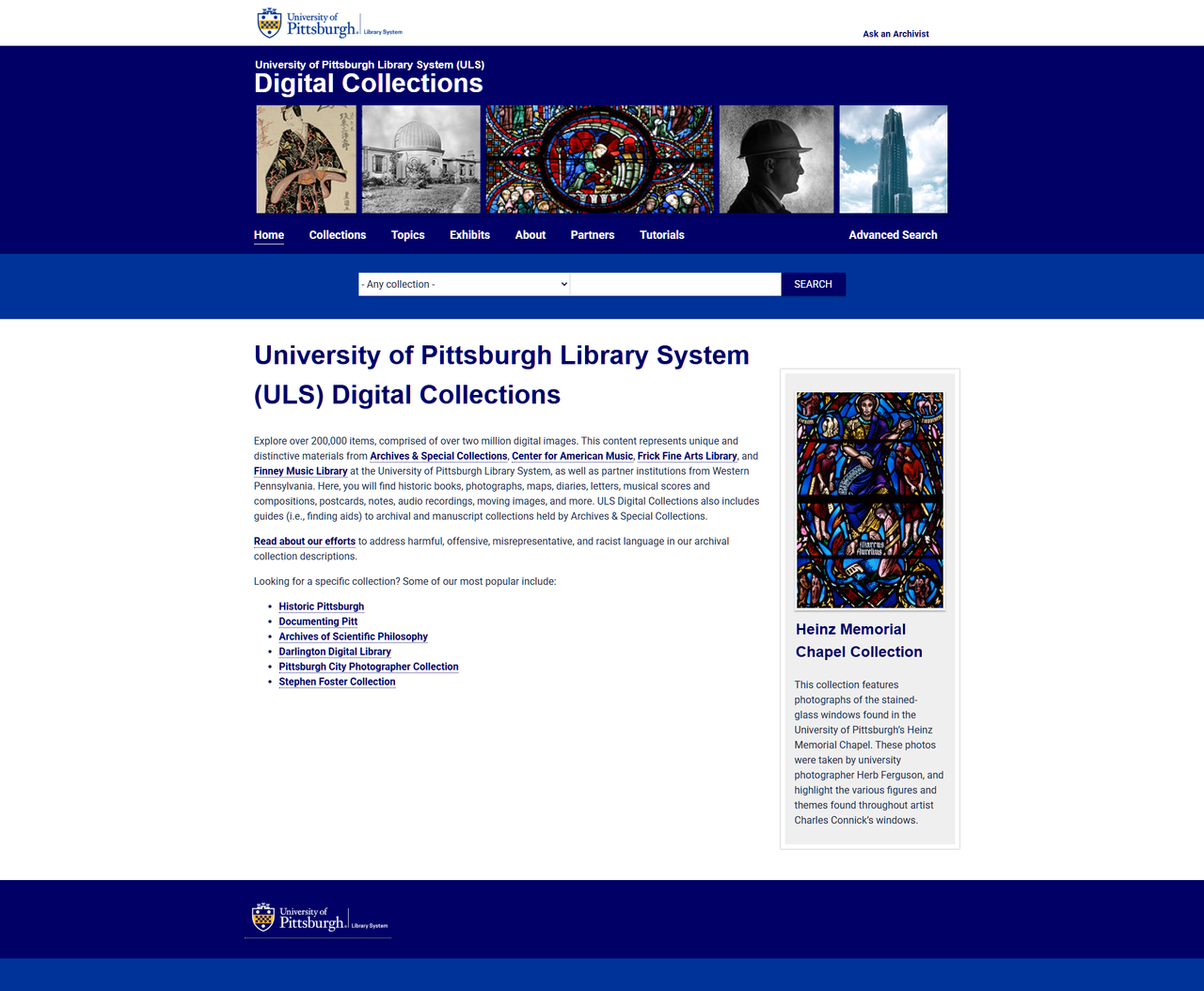
The University of Pittsburgh Library System (ULS) is an academic community dedicated to facilitating intellectual activity and to the creation, dissemination, preservation, and celebration of knowledge and creative expression. We believe the Library should be a place where important conversations unfold, curiosity and experimentation are encouraged, collaboration is key, and diversity and inclusion are fundamental. As one initiative to realize this mission, we select, curate, and provide online access to unique and varied archival and special collections materials. We also host content of partners from other non-profit and cultural heritage organizations in the greater Pittsburgh region and collections created by Pitt faculty, staff, and students.
Our digital collections are currently accessible through these primary websites: ULS Digital Collections, Historic Pittsburgh, and Documenting Pitt.
Our Digitization Process
The ULS has been engaged in the digitization of unique materials from our archives and special collections units since 1999. Over the years we have built up scanning expertise primarily concentrated in our Digital Research Library (DRL). We operate several different scanning devices which enable us to digitize a wide array of material, including photographic items (e.g., glass plate negatives, slides, photographic prints, etc.), books, and manuscript content as well as oversize materials, such as maps, drawings and blueprints. We have found outsourcing audio and video materials to be the best method of reformatting this material from an analog to a digital source.
Digital Collections Development Criteria
To ensure the materials align with the values above, we have developed Digital Collections Development Criteria, which establish guidelines to inform the work of those involved in identifying and selecting ULS distinctive material for digitization. The following criteria are considered:
- The benefits of having the materials available via our digital collections’ sites, both for the University of Pittsburgh and the community at large.
- Does the proposed material relate to, or fall within, our focused collecting topics, as defined by the Archives & Special Collections (A&SC) Acquisition and Collection Development Policy?
- Does the proposed material relate to or add to content that is already available in our digital collections?
- Will the proposed material contribute to archival pluralism in our digital collections? That is, will the inclusion of the items aid in the representation of multiple groups, narratives, theories, and principles?
- Will the material aid in preserving alternate forms of archival records? For example, oral histories are frequently used as alternate forms of records transmission for communities denied a place in the traditional archives. We recognize the multiple formats in which the recording of history and memory can take place
- Will the existence of a digital surrogate aid in the preservation of these fragile materials and enable access to them?
- Recognition that an engagement with history and historical records can help to understand the present and imagine the future.
- Is there an immediate demand for the content of these records in digital format?
- If so, what is the nature of the need (i.e. social context, upcoming anniversary, teaching/instruction purpose, etc.)?
- Assurance that we have the appropriate staff and resources to devote the time needed for additional processing/description/access points.
- Are subject experts in the ULS available to contribute to the descriptive needs of the content to be digitized?
This criteria is meant to promote thoughtful consideration and review of the collections suggested for online dissemination. Rather than limiting the collections chosen, it is meant to challenge the traditional archive and to promote new questions, curiosity, and experimentation.
Reasons for Excluding Certain Material:
We will not provide access in digital format to items from collections that:
- Present a known or suspected copyright infringement and/or that do not meet the necessary requirements of our Fair Use review.
- Duplicate material digitized elsewhere, so long as they are broadly accessible. However, if the material would benefit our immediate communities, and digital access on our sites would enhance their discoverability, the material will be considered for digital dissemination, even if a duplicative work.
- Cannot be shared due to privacy concerns of their subject.
- Should not be shared due to ethical concerns, or, due to cultural practices that deem the item inappropriate for general dissemination, or as defined by current professional practices, such as the Society of the American Archivists Code of Ethics.
Requesting Item Removal
The ULS recognizes that even with best efforts and careful review of digital content, there is still a potential for inadvertent harm with any materials that we make available online. If you would like to make a request to remove certain material from public view, please contact us via Ask-An-Archivist. Reasons for such a request include content that clearly infringes on an individual’s right to privacy, content that is believed to be protected by copyright and is not covered under Fair Use, or other circumstances which you are aware of.
Increasing Inclusive Representation in ULS Digital Collections
The ULS keenly works to introduce more representative and all-encompassing materials to our digital collections. We actively engage in reviewing our collections and their descriptions for charged, biased, and oppressive language. If you come across the description of a collection, an object or an archival resource that you feel is in need of descriptive language review, please reach out using our Ask-An-Archivist contact.
We are prioritizing the digitization of materials that aid in creating a more inclusive, socio-culturally diverse, and representative historical record online. We want to foster a welcoming and inclusive digital environment where all users feel encouraged to explore. It is, however, important to note that the materials selected for online dissemination are often determined by intellectual property, meaning a great deal of material is rendered ineligible for our online digital collections due to possible copyright infringement.
Open Access
The University of Pittsburgh and the ULS are firm supporters of Open Access, and therefore, metadata records for all of our digital collections are freely available for access and reuse, and are made available through common, open standards for information exchange. In some cases, additional permissions from the copyright holder may need to be obtained for the commercial use of content.
Collaborations within Digital Collections
In the case of our Historic Pittsburgh website, the ULS collaborates with local institutions to make materials from their archival repositories more widely available through the website managed by the ULS. In doing so, the digital collections presented by the ULS are strengthened and diversified and access to cultural and community history is increased, all the while allowing the collaborating institutions to maintain custody of those physical collections. In a “post-custodial” environment, these alliances recognize the importance and beauty of digital surrogates, which promote and enable access to unique archival materials in one centralized location. This collaboration and post-custodial environment also means that some content included on our site does not undergo those processes as defined above, but is subject to a review conducted by the holding institution.
The ULS also collaborates with Pitt faculty, staff, and students to host digital collections with original content when it meets the library’s general collection development criteria. Such collections are often a component of digital research or education projects, where the library offers additional services in support. If you are a Pitt affiliate interested in exploring library support for your own digital collections work, we encourage you to get in touch using our Ask-An-Archivist contact.