

美国国会图书馆 数字馆藏
美国国会图书馆是世界上最大的图书馆,馆藏数百万册图书、电影、视频、录音、照片、报纸、地图和手稿。它是美国国会的主要研究机构,也是美国版权局的所在地。
 哈佛大学图书馆 数字馆藏
本站整理 中国相关古籍及拓片专藏
With over 9,600 items, Harvard-Yenching’s Chinese rare book collection is one of the largest of its kind in the Western world.
Browse All Items
9623 items
Collection Overview
The Harvard-Yenching Library’s Chinese Rare Book collection includes Chinese books from the 13th to 19th centuries covering classics & history, philosophy, collectaner, and unique manuscripts.
The collection has been built over generations. Beginning in 1928, the Library commissioned the Chinese acquisitions section of Beijing’ Yenching University Library in to purchase rare and old books. During the Second World War, the Library purchased Ming and Qing block-print editions as well manuscripts with the aid of bookstores in Shanghai and Beijing.
After WWII, the first Librarian of Harvard-Yenching, Kaiming Chiu, continued to expand the collection by obtaining rare items in Japan, such as the Song block-print edition of Dabanruo boluomiduo jing, a collection of rare Ming-dynasty letters, and other works.
The collection is composed of:
- 1,500 Song, Yuan, and Ming block-print books (including duplicates), and 188 of them cannot be found in any of the major libraries in China, Taiwan, Hong Kong, or Japan
- Roughly 1,500 manuscripts (including holographs)
- Song, Yuan, and Ming encyclopedias (leishu), including Sancai tuhui 三才圖會, Shantang sikao 山堂肆考, and Tang leihan 唐類函
- Nearly 2,600 gazetteers, including 720 rare editions printed from the Ming through the Qianlong period
- Banned books and women’s writing
The Fine Arts Library and Harvard-Yenching Library holds rubbings of objects that date from the Qin Dynasty to the Ming Dynasty.
Browse All Items
5029 items
Collection Overview
Harvard is home to over 5,000 East Asian rubbings, the majority of which are from China. This joint collection contains some 2,700 rubbings from the Fine Arts Library and some 2,300 from Harvard-Yenching.
The rubbings were made from ancient stone stelae, tomb tablets, and Buddhist and Daoist scriptures on stelae and rocks, as well as from inscriptions and designs from bronze vessels, jade objects, ceramics, tomb bricks, and roof tiles.
Objects used to make the rubbings in the collection date from the Qin Dynasty (221–207 BCE) to the Ming Dynasty (1368–1644 CE).
Scholars have found these documents useful for studies in Chinese history, biography, epigraphy, Buddhist and Taoist art, fine arts, and calligraphy. The most significant rubbings in the collection are those from:
- Xiaotangshan (孝堂山) stone chamber
- Wu Liang shrine (武梁祠) in Shandong Province dating from the Han Period (206 BCE–220 CE)
- Forest of Stelae at Xi’an (西安碑林)
- Buddhist grotto sites in Gongxian (巩县) and Longmen (龙门) in Henan Province dating from the Northern Wei period (386–534 CE)
Harvard scholars and collectors Langdon Warner, Lawrence Sickman, Hamilton Bell, and C. Adrian Rübel gave many of the rubbings in this collection to Harvard. Langdon Warner himself collected many rubbings in north and northwest China during two expeditions for the Fogg Art Museum in 1923–1924 and 1925.
Harrison D. Horblit Collection of Early Photography
Discover the history and science of early photography through a collection of photographs and other materials.
Browse All Items
6476 items
Collection Overview
Dating from the very beginning of photography, this collection documents the history and science of photography from the 1830s to roughly 1900.
A science enthusiast and avid collector, Harrison D. Horblit ‘33 collected photographs no matter the condition, ensuring their preservation for us to see and study early photography. Objects in the collection include photographic prints, photographically illustrated books, reference works, cameras, and periodicals.
The images in the collection show us the evolution of the photograph from something slightly imprecise and sometimes fleeting to something more efficient, detailed, and long lasting. Nearly all (if not all) photographic processes from the 19th century are represented in the collection, including: daguerreotypes, salted paper prints, paper negatives, albumen prints, ambrotypes, and more.
We invite you to explore the collection to:
Still life with ancient Babylonian artifacts on books
- Learn more about the origins of photography
- View some of the earliest photographic prints, including early prints by William Henry Fox Talbot (1800-1877), credited as one of the inventors of photography and inventor of the negative to positive photographic process
- Examine different types and processes of photographs documenting the evolution of photography
- See how the subject of photographs has (or has not) changed over time
- View one of the largest daguerreotype collections in the world
- And look at vintage photographs from the 19th century for fun
The wide range of the collection documents a variety of ways people used photography in the 19th century, most of which we can still see in the photographs we take today.
We are working to catalog and digitize the collection so please check back again soon to see more material.
Photos taken by Hedda Morrison in China, 1933–1946.
Browse All Items
8579 items
Collection Overview
This collection of some 6,000 photos and 10,00 negatives were taken by Hedda Morrison during her time living in China from 1933 to 1946.
Morrison studied photography in her native Germany before leaving in 1933 for a position as manager of Hartung’s Photo Shop in the Legation Quarter of Peking, now Beijing.
From 1938 until she and her husband left China in 1946, Morrison worked as a freelance photographer. She sold individual prints or albums of her work and took photos for other people’s books on China.
Her photographs document lifestyles, trades, handicrafts, landscapes, religious practices and architectural structures, many of which have since changed or been destroyed.
The photos, mounted in themed albums prepared by Morrison, and the negatives, were bequeathed to the Harvard-Yenching Library, which Morrison’s husband called “the best permanent home for her vision of a city and people that she loved.”
Claude L. Pickens, Jr. Collection of Photographs
Muslims in China
A window into the lives of Muslim communities in Western China during the early 20th century, collected by an American missionary.
Browse All Items
1216 items
Over 1,000 photos of Muslims and Christian missionaries working among them in Western China in the 1920s and 1930s form the core of this collection. The Harvard-Yenching Library collection, which also includes books, broadsides, posters and other items, captures a record of buildings, inscriptions, and Muslim culture lost to wars and the Cultural Revolution.
The collection was the gift of The Rev. Claude L. Pickens, Jr., an American Episcopal priest who worked for many years as a missionary to Muslims in Western China. The collection also includes a series of notebooks in which Pickens compiled an unpublished biographical dictionary of Muslims in China.
View collection details, including the collection finding aid, which includes a complete description of items in the collection.
About Pickens
Claude L. Pickens, Jr. (1900–1985), and his wife, Elizabeth Zwemer Pickens, were Christian missionaries of the China Inland Mission (C.I.M.) and had a particular interest in China’s Muslims, now officially designated as “Hui” in China. Their interests were both evangelical and scholarly. From 1927 to 1937, Pickens worked in river ports along the Yangzi and for the Episcopal Diocese in Hankow, where he was assistant pastor to the Chinese pastor at St. Peter’s Church.
In 1933, accompanied by his father-in-law, Samuel M. Zwemer, a missionary to Muslims in the Middle East, and again in 1936, Pickens and other China missionaries made surveys of Muslims in northwest China, northeast Tibet, and Inner Mongolia. In 1933, Rev. Samuel Zwemer was invited by the Kuling Convention Committee in Kiangsi, China, to address the Convention. Zwemer, who was editor of the influential journal Moslem World, had previously visited China in 1917 and made a trek into China’s northwest in 1936, during which he supplemented his earlier photographic record.
From 1937 to 1938, during the Sino-Japanese War, Pickens was on leave in the U.S. and in Zamboanga, Philippines, where he worked with Muslims. In 1939, the family returned to central China. During WWII, they were held from 1941 to 1942 by the Japanese as prisoners of war. From 1942 to 1945, Rev. Pickens worked for the FDMS in New York City and attended Columbia University. In 1945, he received an M.A. from the Dept. of Chinese and Japanese with a thesis entitled Annotated Bibliography of Literature on Islam in China (Hankow: Society of the Friends of Moslem in China). His own copy of the Bibliography contains numerous citations added by him in hand over the years and is held in the Harvard-Yenching Library’s collection of his materials. Rev. Pickens described the genesis of his collection in a letter to the Library in 1984:
I began collecting such literature in 1926 when I met Mr. I. [Isaac] Mason in Shanghai. He left to retire in England the next year and gave me a number of the old books. I was able to accumulate a number of the later publications through the Muslim Book Store in Peking. When we had to leave China after Pearl Harbor, I brought some of these Islam books home, took them back to China in 1945, and brought them out again in 1950. If nothing else, they have traveled a good deal.
After WWII, the Pickens family returned to central China, where Claude was Canon of St. Paul’s Cathedral, Hankow, until 1950, when the family returned to New York. From 1953 to 1965, he worked with the National Council of Churches’ Student Volunteer Movement and then with foreign students in New York City for the Foreign and Domestic Missionary Society-Episcopal Church Center. In 1962, he took a leave to minister to Aramco employees in Arabia. He retired to Annisquam, MA, in 1969 to study and write.
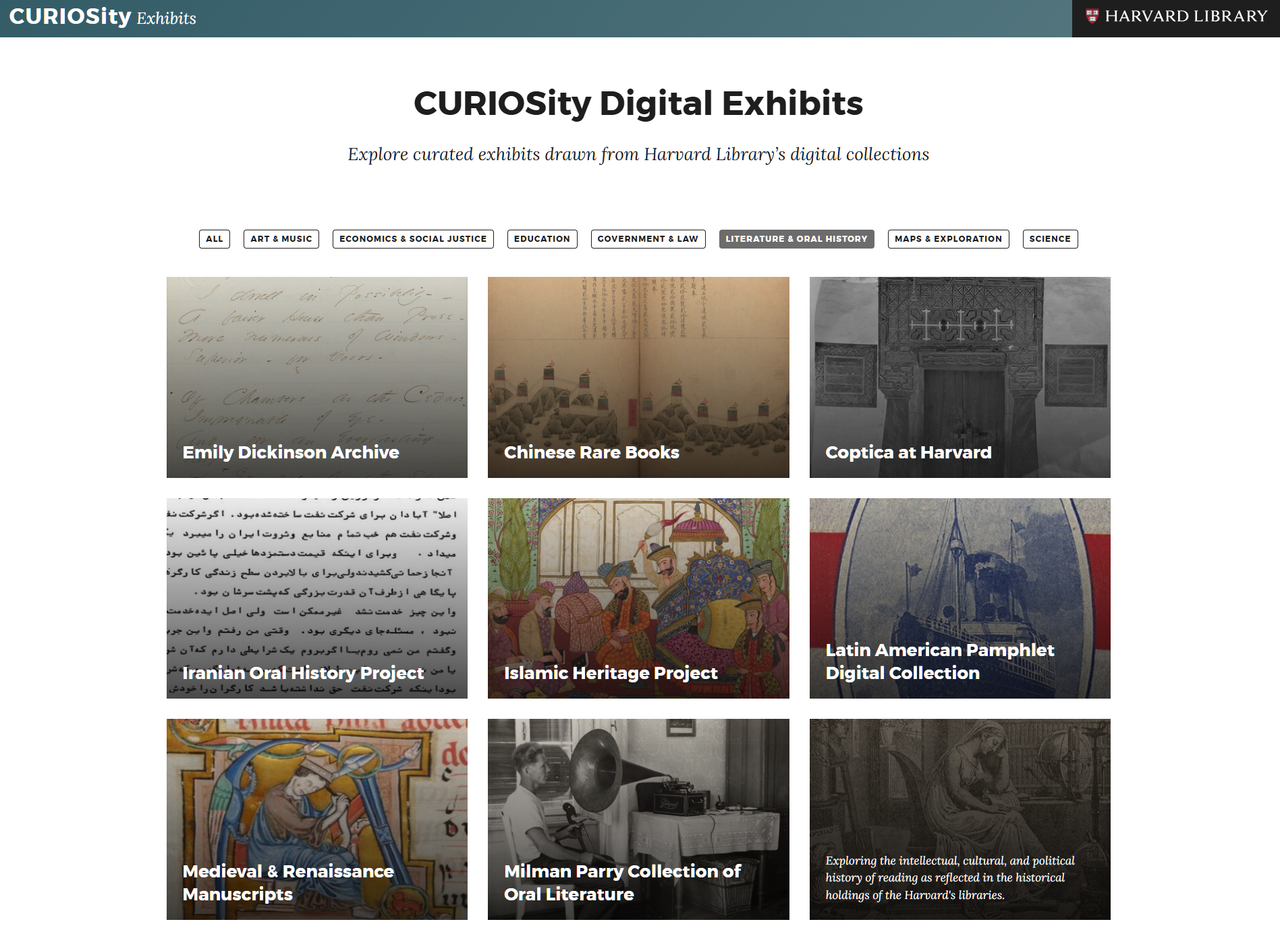
Explore curated exhibits drawn from Harvard Library’s digital collections
 Creative Commons Attribution 4.0 International License
哈佛燕京图书馆 数字馆藏
Harvard-Yenching Library Digital Collections
Research Guides for East Asian Studies
Chinese Studies at Harvard
本站安逸导航提供的哈佛大学图书馆 数字馆藏都来源于网络,不保证外部链接的准确性和完整性,同时,对于该外部链接的指向,不由安逸导航实际控制,在08/15/2026 13:19收录时,该网页上的内容,都属于合规合法,后期网页的内容如出现违规,可以直接联系网站管理员进行删除,安逸导航不承担任何责任。